📝Confidentiality note: This project was developed for a client, so certain details related to branding and implementation are not publicly disclosed. If you’d like to learn more about the process, decisions, or outcomes, I’d be happy to share more in conversation.
Overview
Growing Resilience is an interactive educational tool designed for the University of Rochester Medical Center’s Recovery Center of Excellence. The experience translates complex public health research on Adverse Childhood Experiences (ACEs) and Positive Childhood Experiences (PCEs) into an approachable digital format for families. I led the design of a gamified, drag-and-drop digital garden that allows users to actively build environments that support children’s wellbeing. Each object placed in the garden represents a resilience-building activity, environment, or relationship, helping families understand how everyday actions contribute to long-term health outcomes.
The project focused on transforming dense research into an engaging, behavior-driven learning experience that works effectively for rural communities, where mobile access and attention constraints are critical considerations.
Live Prototype
The Challenge 💡
Research on ACEs and childhood resilience is typically communicated through reports, clinical frameworks, or long-form educational materials designed for healthcare professionals.
For families, especially in rural communities, these resources present key barriers:
• Information overload – long, text-heavy explanations are difficult to engage with in day-to-day life
• Low retention – passive reading rarely translates into real behavioral change. Research from UC Irvine has tracked average attention on a single screen dropping from about 2.5 minutes in 2004 to under a minute by 2020, that's the baseline for everyone. Now layer on top of that the reality for rural New York specifically, the state comptroller's office has documented that over a million New York households still lack broadband subscriptions, and in some rural counties, close to a quarter of the population lacks broadband access entirely.
The challenge was not just to simplify the content, but to translate it into an experience that feels natural, low-effort, and easy to engage with, while still maintaining the credibility of a medical institution.
Impact
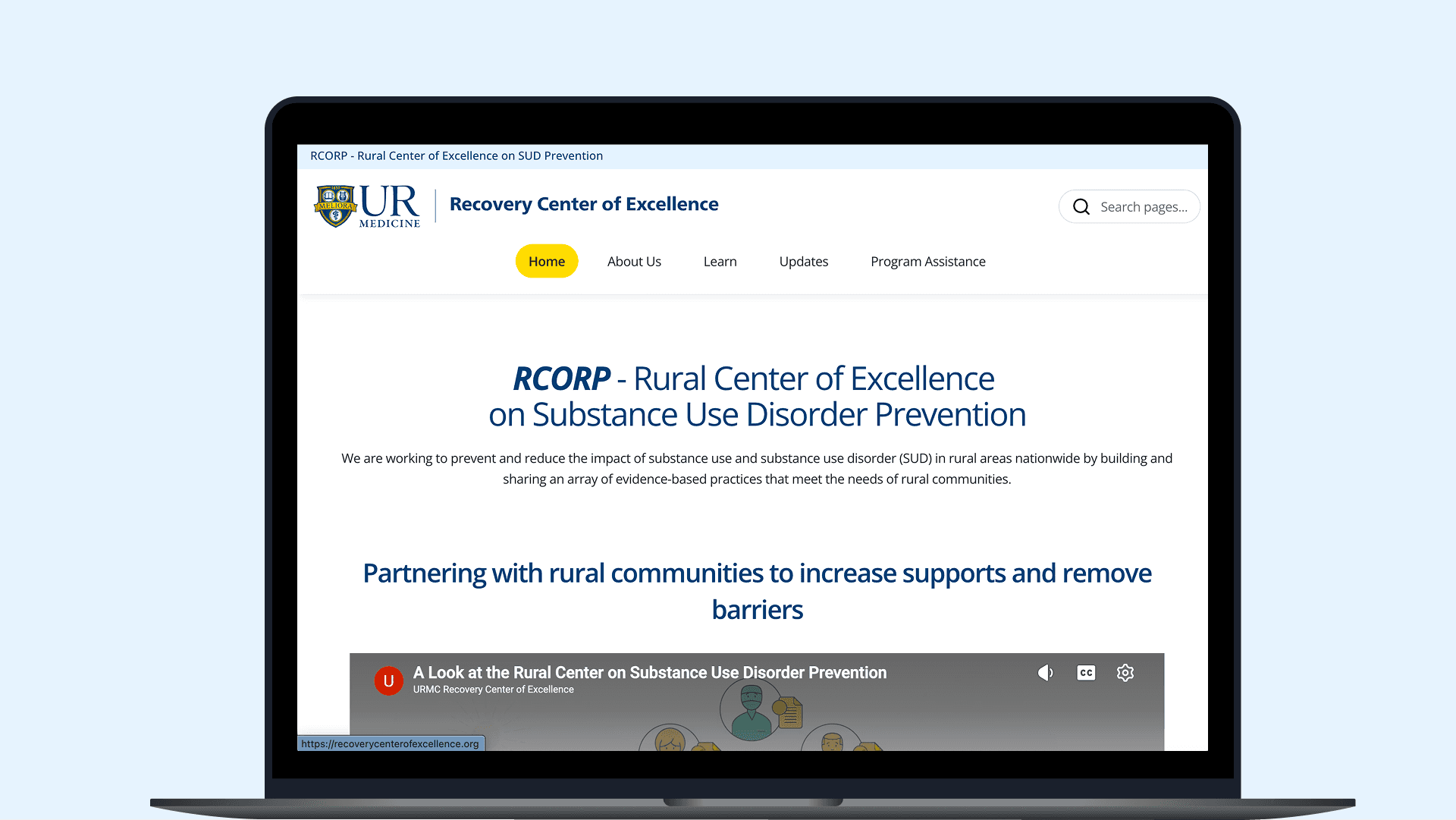
Growing Resilience is part of URMC's Recovery Center of Excellence — a federally funded public health program supported by a $3.33M HRSA grant from the US Department of Health and Human Services. The tool was designed to serve rural families and caregivers, a population historically underserved by clinical health education. Before this project, no interactive digital experience existed to translate URMC's childhood resilience research into something families could actually engage with outside a clinical setting.
My Role
Lead UX Designer — Research, Strategy, Interaction Design, UI
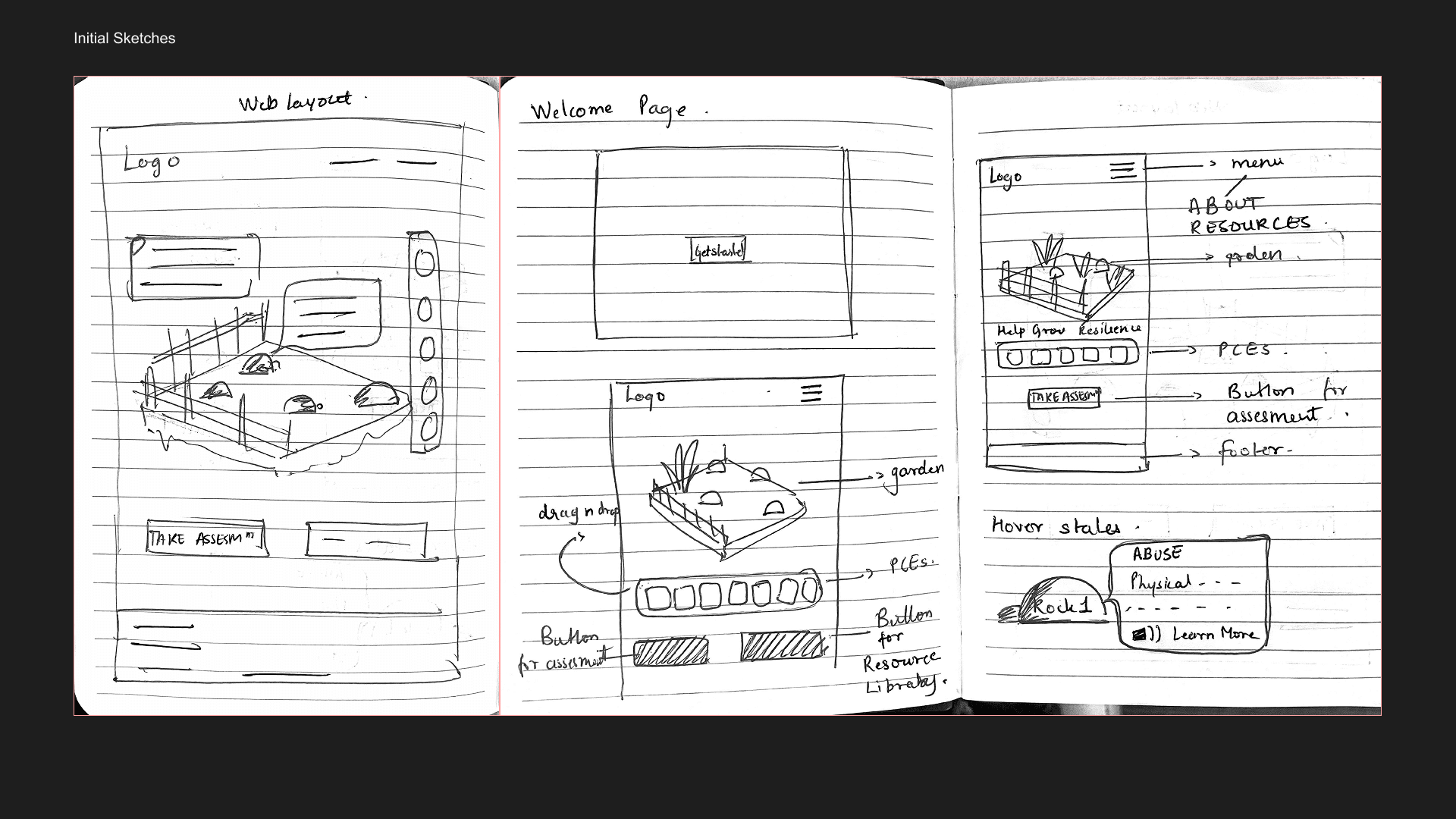
As Lead Designer, I guided the exploration of the garden metaphor alongside the team, working through multiple UI styles and visual directions together. I led the sketching of different layout options for how the garden could look, whether lush and playful, minimal and symbolic, or somewhere in between.
Target Audience🎯
Designed for rural families and caregivers, many of whom are accessing content on mobile devices with limited time and familiarity with clinical terminology.
The experience prioritizes simplicity, clarity, and low-effort interaction, making resilience concepts easy to understand and apply in everyday life.
Visual design system
To achieve this, I directed the design system strategy, working closely with a graphic designer who brought the nature-inspired illustrations to life based on my direction for style, tone, and visual consistency with the garden metaphor. The system combined:
• nature-inspired illustrations reflecting the garden metaphor
• accessible color palettes aligned with URMC branding
• clear visual hierarchy for educational prompts
• consistent iconography and object design
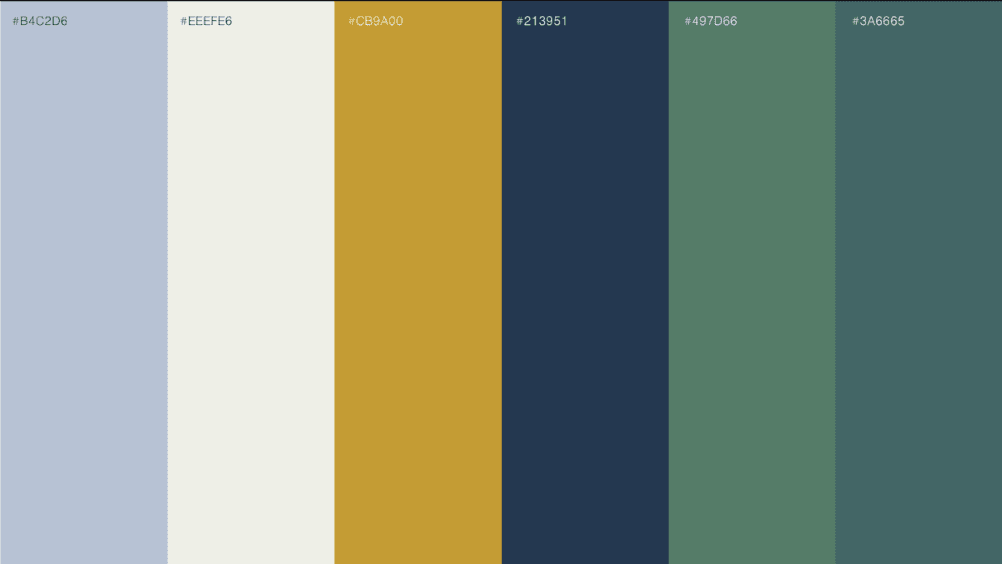
The color palette was a deliberate move away from URMC's default clinical blue-and-white, blue reads as sterile and institutional, the opposite of a warm evening in someone's backyard. I anchored the palette in muted greens and warm earth tones instead, colors that read as garden and growth intuitively, using URMC's brand blue only as a small trust marker in the header and key credibility moments. Content hierarchy required a similar balancing act. Clinical language needed simplifying, but oversimplifying risked losing institutional credibility. Microcopy went through several rounds of tightening, a real negotiation between "accessible" and "medically credible," not a solo aesthetic choice.Product Strategy 🔮
Rather than presenting resilience as a list of recommendations, I led the team in reframing the experience around participatory learning.
The central concept became a digital resilience garden, where users actively construct environments that support child development.
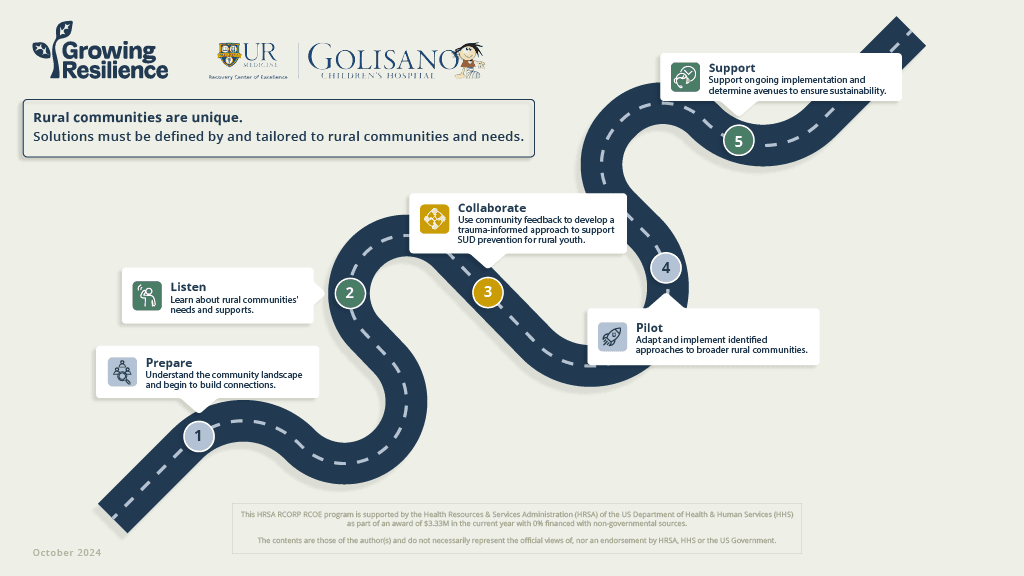
This metaphor helped achieve three goals:
• Make abstract concepts tangible
• Encourage exploration instead of passive reading
• Create emotional engagement through visual storytelling
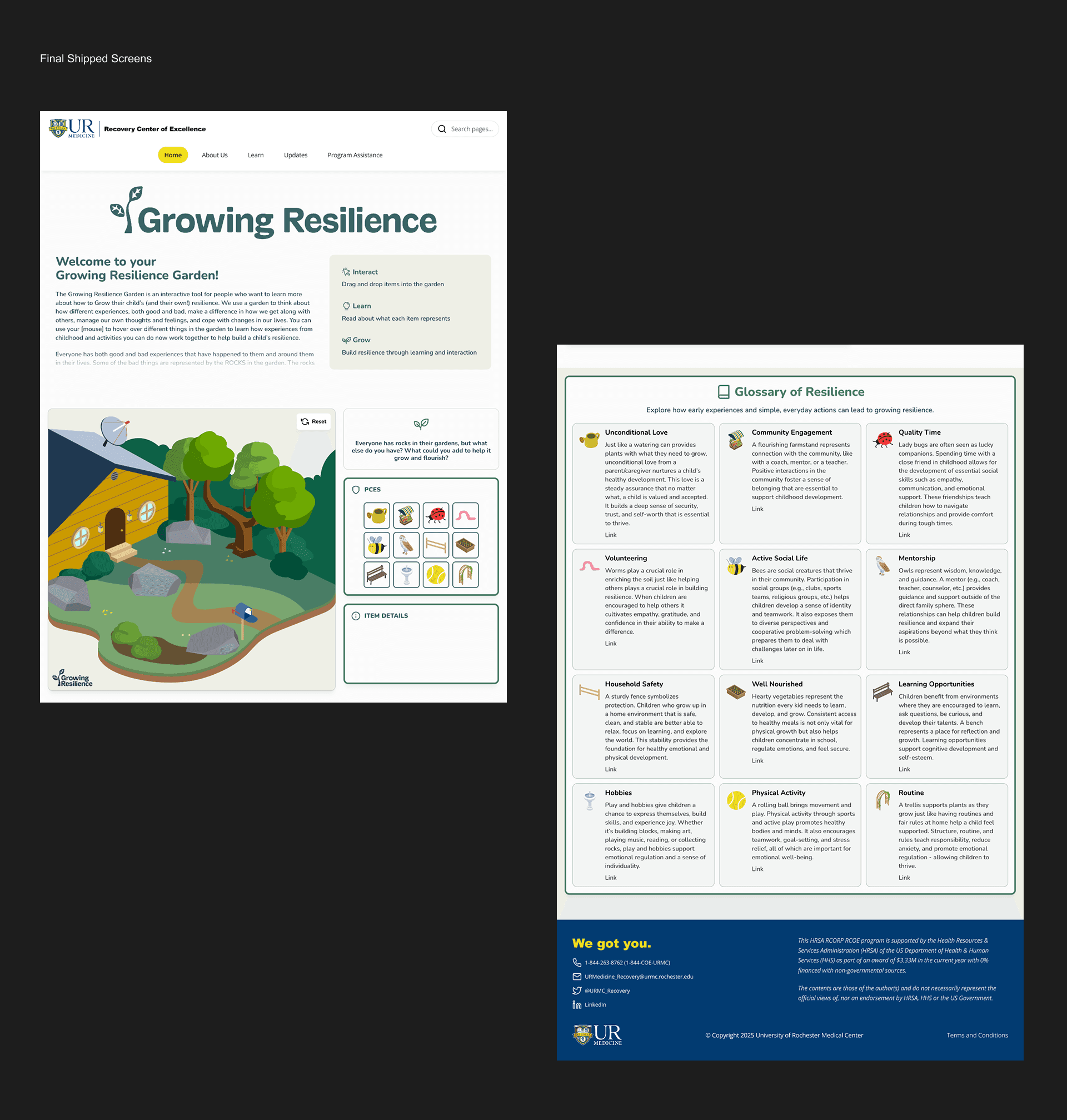
Each object in the garden represented a PCE category such as emotional safety, supportive relationships, learning opportunities, or community belonging.
Design Process 🚀
Exploring the garden metaphor
The first real challenge was translating dense clinical language into something that felt like discovery, not homework. Before landing on any single direction, I explored what metaphor could hold 12 different, fairly abstract concepts — emotional safety, community belonging, learning opportunities — without turning into a literal checklist. A garden kept surfacing because growth is already how people intuitively think about a child developing, though it took several rounds of exploring less successful metaphors first.
Wire-framing
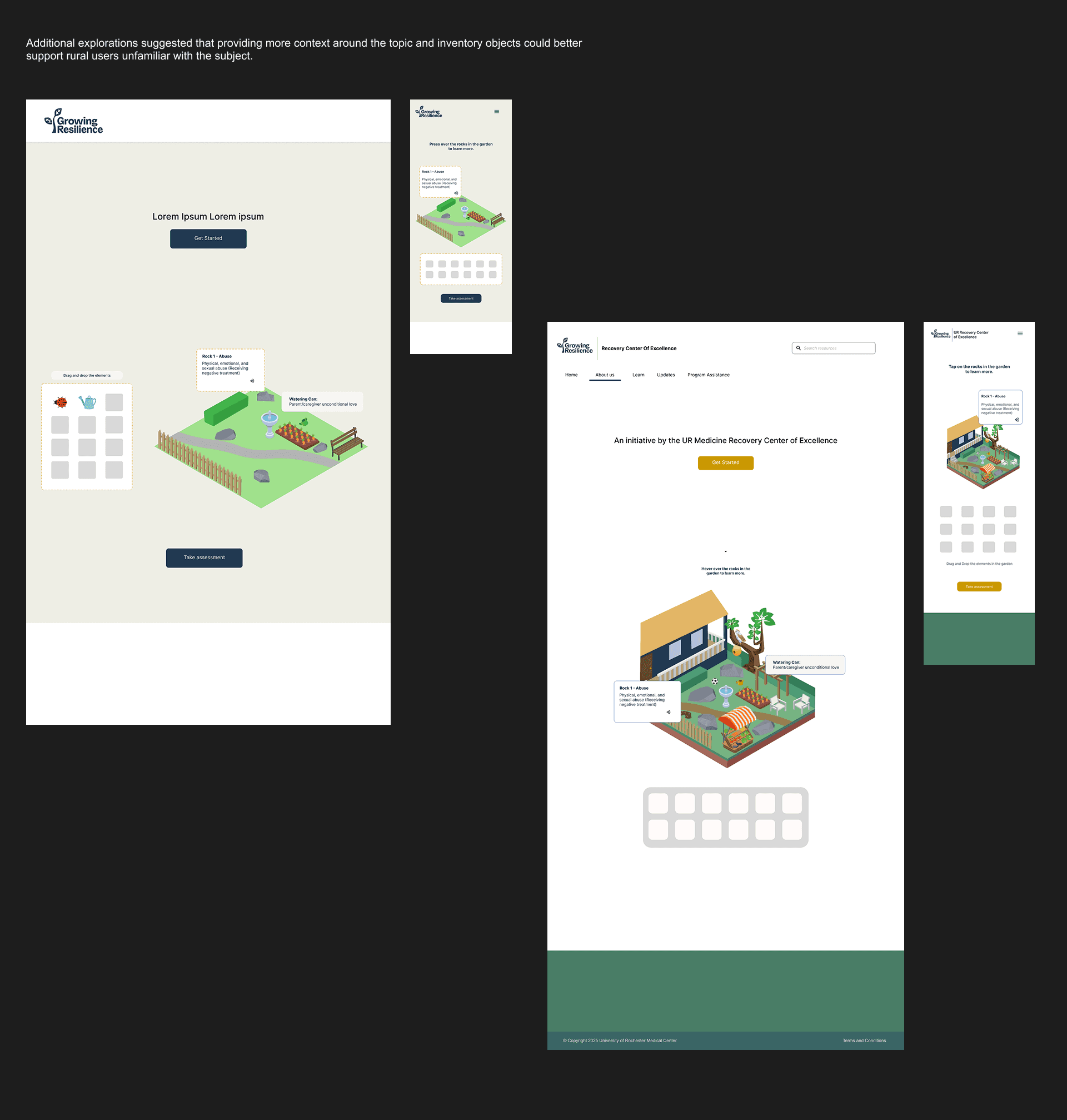
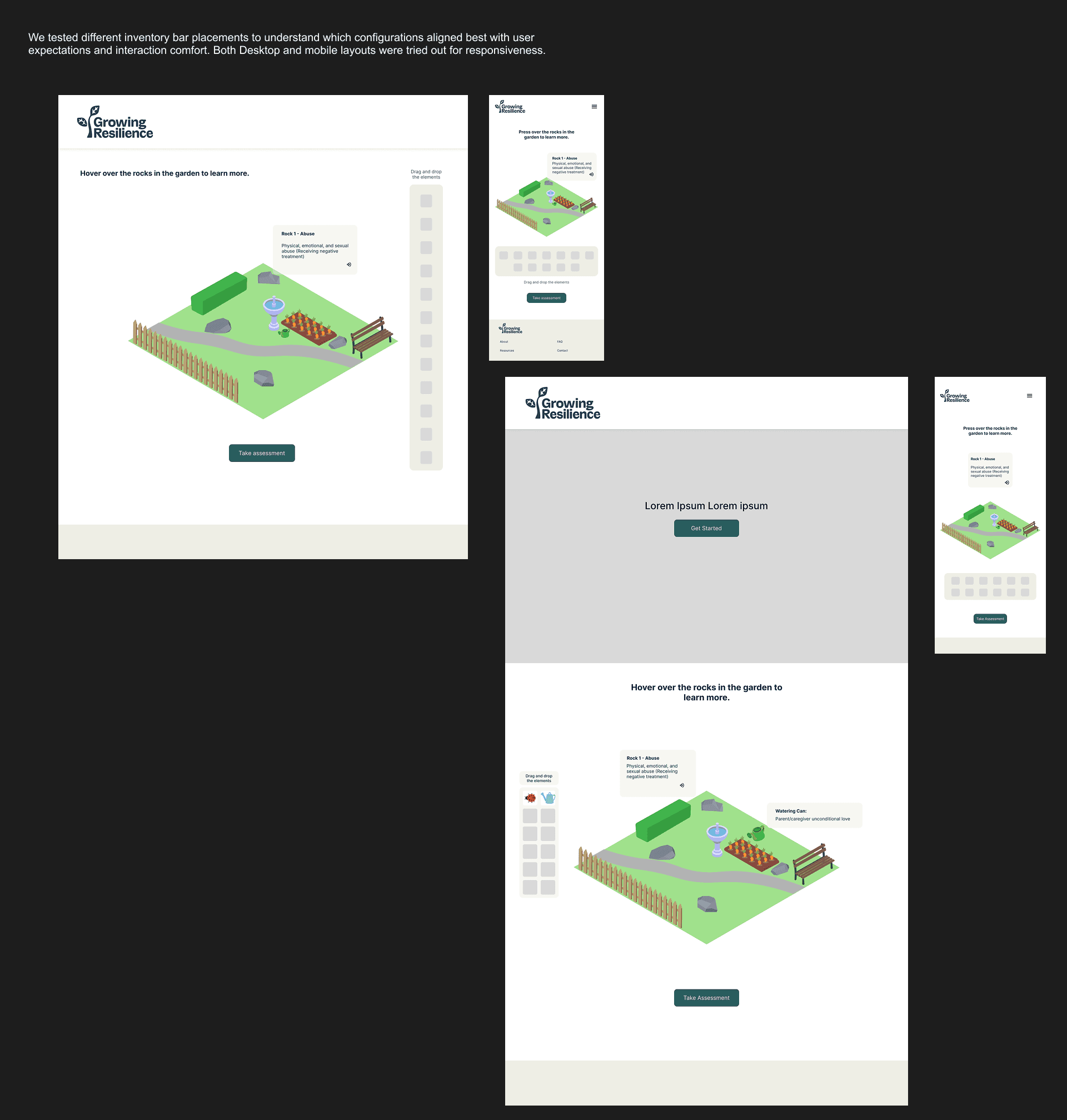
Once the concept was aligned, I created the low-fidelity wireframes to map the user flow. The design was structured around an inventory bar from which users could pick items (trees, plants, tools, etc.) and place them into their garden. Each placement triggered a short educational pop-up, linking the action to a PCE theme such as emotional support, learning opportunities, or community connection. The visual language balances approachability and credibility. I directed the design system strategy, working with a graphic designer who brought the nature-inspired illustrations to life based on my direction for style, tone, and consistency with the garden metaphor
Initial layout explorations highlighted the importance of simplifying navigation and rethinking content structure to transform complex topics into an interactive, user-friendly experience for rural audiences.
Final Outcome
Design Impact
Guided onboarding for clarity
Introduced a lightweight onboarding panel to help users quickly understand how to interact with the experience, reducing initial confusion and cognitive load.
From information to interaction
Reframed dense educational content into a participatory experience, allowing users to actively build a garden and learn resilience concepts through doing rather than reading.
Intuitive drag-and-drop system
Designed an inventory-based interaction model that feels familiar and easy to use, especially for mobile-first users.
Learning through immediate feedback
Connected each user action to contextual learning, where placing an object reveals its meaning, improving engagement and retention.
Mobile-first by default
Optimized layouts, spacing, and touch targets for smaller screens, ensuring accessibility for rural audiences who primarily rely on mobile devices.
Progressive disclosure of content
Separated core interaction from deeper educational content, allowing users to explore at their own pace without feeling overwhelmed.
Supporting deeper learning with a glossary
Introduced a structured glossary as a secondary layer for users who want to explore concepts in more depth without interrupting the main experience.
Balancing trust with approachability
Combined a clean, structured layout with warm, nature-inspired visuals to maintain medical credibility while staying engaging for families.
Designed for behavior change
Focused on making resilience concepts actionable and memorable, moving beyond awareness to encourage real-world application
Main Interaction Design ❇️
We then explored multiple visual directions for what the garden could actually be: lush and photorealistic, minimal and symbolic, or somewhere in between. Photorealistic felt too heavy for mobile load times and risked looking dated fast. Fully symbolic, more like icons than a garden, felt cold and lost the emotional warmth that was the entire point of the metaphor. I landed in the middle — illustrated but warm — because it had to read instantly as "garden" to someone with low context, while staying light enough to load fast on a spotty rural connection.The core interaction model centers around drag-and-drop garden building.
Users select items from an inventory and place them into their garden. Each action triggers contextual learning cards that explain the resilience principle behind the object.
This interaction design shifts the experience from reading about resilience → actively building it.
Key design considerations included:
• Large touch targets for mobile usability
• Immediate feedback and micro-interactions
• Short, digestible educational prompts
• Progressive exploration rather than overwhelming information
Drag-and-Drop action
The prototype allowed us to validate:
• drag-and-drop mechanics
• touch interactions on mobile devices
• animation feedback for object placement
• clarity of learning prompts
Key Features ⚡️
• Interactive drag-and-drop garden building
• Contextual learning prompts tied to resilience concepts
• Mobile-first interaction design
• Custom illustration system
• Seamless integration with URMC brand standards
Room to Bloom🌻
As a designer, my biggest reflection on this project is cohesion. The interactive garden experience achieved exactly what we set out to — warm, engaging, and approachable. But the surrounding website experience remained constrained by institutional design conventions, creating a jarring tonal shift between the two. If I returned to this project with full creative freedom, I would extend the garden's visual language — its warmth, illustration style, and nature-inspired palette — across the entire experience, so families never feel like they've stepped back into a clinical environment. Good health education shouldn't feel like a government form
Outcome 🏆
The final shipped experience covers 12 Positive Childhood Experience categories — each translated from dense clinical research into interactive, family-friendly content. The prototype was successfully handed off to URMC and published under their official Recovery Center of Excellence platform. The client responded with strong positive feedback, noting the interaction design exceeded their expectations. Growing Resilience marked the first time URMC's childhood resilience research was made accessible to everyday families through an interactive digital format — moving public health education out of clinical reports and into people's hands.
"While the platform was handed off after our engagement and I don't have visibility into post-launch usage data, if I were running this project again I'd advocate for structured usability testing with real caregivers before final handoff, to complement the strong stakeholder feedback we receive."